
Helmholtz Institute for One Health (HIOH), Greifswald, Germany
🏆 Winner of the 1st SPAAM blog post competition
Introduction
Influenza, COVID-19, dengue, Ebola, and rinderpest are examples of RNA viral diseases notorious for triggering outbreaks that close borders, overwhelm health systems, and destabilize economies and agriculture worldwide [1]. Yet despite their profound societal and ecological impacts, the origins and long-term evolutionary dynamics of many of these viruses remain poorly understood. Most evolutionary inferences rely on contemporary viral diversity and short epidemic time series spanning only decades, a narrow window compared with the millennia over which RNA viruses have circulated, diversified, and repeatedly crossed species barriers throughout human and animal history. In recent years, paleovirology has emerged as a powerful approach for investigating deep evolutionary history of viruses through genomic “fossils” known as endogenous viral elements (EVEs). These sequences arise from viral integration into the host germ line and, in rare cases, can persist for millions of years when retained by selection, thereby preserving molecular traces of ancient infections [2–7]. However, most EVEs are too ancient to resolve the recent processes that shaped the emergence of human and domesticated animal diseases. A powerful way to access these periods is the direct analysis of authentic ancient pathogen genomes recovered from host remains. By extending observations into the past, such genomes can for instance recalibrate molecular clocks, uncover extinct lineages, clarify host shifts, and link viral emergence to ecological and demographic change [3, 8–10]. However, this approach has thus far been applied predominantly to bacteria and DNA viruses [11, 12]. This imbalance is evident in community resources such as Ancient MetagenomeDir, where fewer than 10% of cataloged ancient viral genomes correspond to RNA viruses, despite RNA viruses comprising more than half of known mammal-associated viruses today [13, 14]. This disparity likely reflects technical constraints rather than biological reality, as protocols optimized for the recovery and sequencing of highly degraded RNA remain rarely implemented. Consequently, RNA viruses are systematically underrepresented in ancient genomic datasets, creating a major blind spot in reconstructions of pathogen history. In this context, it appears timely to consider how these limitations might be addressed in order to better integrate RNA viruses into paleovirological research. This mini-review therefore aims to synthesize emerging strategies for the recovery, authentication, and analysis of RNA viruses from archival and ancient materials. By bringing together recent technical advances while acknowledging the challenges that remain, it outlines a practical roadmap to facilitate their inclusion in paleovirology and to extend evolutionary inferences beyond contemporary outbreaks. Ultimately, these approaches may enable a more direct and nuanced reconstruction of the origins, emergence, and long-term dynamics of the RNA viruses that have shaped human and animal disease. Ancient RNA as a viable molecular archive A major barrier to ancient RNA virus research has long been the assumption that RNA is too unstable to persist beyond short historical timescales [15]. This view is grounded in well-known biochemical considerations, including rapid postmortem RNA fragmentation, ubiquitous RNase activity, and the predominantly single-stranded nature of most RNA molecules [16]. Consequently, for buried archaeological remains in particular, these processes were thought to rapidly eliminate RNA, leading to the expectation that ancient specimens would rarely contain recoverable RNA and that ancient virus research should therefore focus primarily on EVEs. However, greater optimism surrounded pathology and archival specimens, especially formalin-fixed tissues, since formalin fixation inactivates RNases [17, 18] and has long been used for routine tissue preservation since its introduction in the early 1890s [19]. Early studies indeed demonstrated that RNA could persist postmortem when preserved by cold, desiccation, or chemical treatment and be detected in such material, although extensive cross-linking and fragmentation introduced substantial technical challenges that complicated sequencing-based recovery [20]. This momentum enabled the broader application of RNA-based approaches to pathological and archival tissues. Prominent examples include the reconstruction of influenza virus genomes from early twentieth-century specimens (Fig. 1), which demonstrated that the strain responsible for the 1918 Spanish influenza pandemic originated from an avian-derived lineage that recently adapted to humans, clarifying its evolutionary source and early diversification [21]. Another notable example is the sequencing of a 1912 measles virus genome, which refined estimates for the virus’s host jump from cattle to humans to approximately 3,000 years ago, a period when increasing population density likely enabled sustained transmission in a newly susceptible human population [9] (Fig. 1). More recently, authentic viral RNA has been recovered from even older archival specimens stored in alcohol since the eighteenth century (Fig. 1). Although these findings have not yet undergone peer review, researchers reported the recovery of an almost complete Rhinovirus A genome from a human lung specimen. Because this sample predates the widespread adoption of formalin fixation, it demonstrates that centuries-old museum collections preserved using alternative methods can retain recoverable informative viral RNA [22]. These results also raised a broader question: if viral RNA could be recovered from archival material, under what conditions might it persist for much longer periods? Addressing this question requires moving beyond historical specimens toward naturally preserved material in which degradation processes are slowed or arrested.
Beyond the recovery of historical RNA pathogen molecules
Recent progress in ancient host genomics has demonstrated that nucleic acids can persist far longer than previously assumed under favorable environmental conditions [23]. Consistent with this, ancient microbial DNA has been recovered from specimens spanning from hundreds to millions of years old [11, 24–28]. On the RNA side, recent studies have shown that RNA, previously assumed to be far more fragile, can also persist over millennial timescales when preservation conditions are favorable. For example, RNA has been recovered from a 14,300-year-old Pleistocene canid preserved in permafrost [29], as well as from extinct species such as the thylacine and from permafrost-preserved mammoths dated to approximately 37,000 years ago [30, 31] (Fig. 1). Building on these insights, the first convincing evidence that RNA viruses can be recovered from ancient material is now beginning to emerge. In plants, RNA preservation appears to be more common than in animals, likely because intact RNA is required for seed viability and germination, facilitating its persistence over extended timescales. Consistent with this, a Chrysovirus was isolated from approximately 1,000-year-old maize samples [32] (Fig. 1). However, in animals, recovery presents a substantially greater challenge, as RNA molecules typically degrade rapidly after death due to enzymatic activity and environmental damage. Nevertheless, recent metatranscriptomic analyses of naturally mummified Adélie penguin remains from Antarctica reported the recovery of authentic RNA virus genomes spanning centuries to millennia, including diverse lineages of Picornavirus and Rotavirus [33] (Fig. 1).
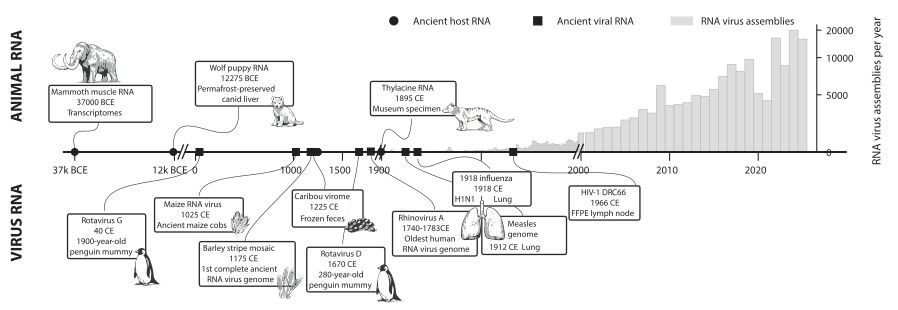
Figure 1. Ancient host and viral RNA discoveries placed on a timeline with modern RNA virus sequencing activity. The timeline uses a segmented non-linear year axis in which deep time (∼40,000–10,000 BCE), the Holocene (10,000 BCE–0), the historical period (0–1900 CE), the 20th century (1900–2000), and the genomic era (2000–present) are displayed at progressively expanding scales to allow simultaneous visualization of sparse ancient RNA discoveries and dense modern sequencing. Annotated host ancient RNA events (top; circles) and ancient viral RNA events (bottom; squares) were curated manually from the literature. Modern RNA virus data (bars) correspond to complete NCBI RNA virus assemblies, filtered to representative RNA virus families found in mammals, and plotted yearly according to collection date metadata. These assembly counts are intended to reflect relative temporal trends in sequencing activity rather than absolute numbers of RNA virus genomes generated, which are substantially higher in practice.
Together, these findings show that, under favorable preservation, ancient RNA virus genomes can persist far longer than previously assumed. The challenge ahead is to move beyond proof-of-concept discoveries toward systematic, reproducible detection and authentication, supported by strategic sampling, optimized laboratory workflows, and robust bioinformatic and evolutionary frameworks to reliably integrate these data into reconstructions of viral evolution.
Future directions in the field
Efficiently targeting RNA viruses
As discussed above, pathology collections containing formalin-fixed specimens, as well as in some cases alcohol-preserved samples, can serve as valuable and often preferred sources of material for the discovery of relatively recent RNA viruses. When the objective is to investigate much older infections, naturally mummified remains with preserved internal tissues represent especially promising targets and should be prioritized, where ethical and curatorial considerations permit.
Because tissue tropism determines viral load, careful selection of sampling sites within remains is critical. However, most preserved tissues analyzed in ancient biomolecular studies consist of skin or muscle, which are rarely the primary targets of RNA viruses. In contrast, high viral loads typically occur in organs such as lung, intestine, liver, spleen, and oral or nasal mucosa. For acute infections, viral abundance also varies with disease stage and time of death [34–36], often peaking early and declining rapidly, so individuals dying late during infection may contain little detectable RNA. Consequently, both tissue availability and host disease stage shape recovery success. These dynamics are also frequently age-structured, with juveniles often showing higher viral loads, prolonged shedding, or increased mortality for many RNA viruses [37–39].
Dental calculus may represent a promising alternative substrate for investigating RNA viruses. Although it contains PCR inhibitors, extractions from ancient remains often yield high nucleic acid loads, sometimes exceeding those of other substrates [40]. These mineralized deposits may therefore preserve RNA viruses with oral or respiratory tropism. Supporting this, SARS-CoV-2 RNA has for instance been detected in dental calculus [41].
Whether ancient viral RNA can survive over longer timescales remains unclear, but calculus may be particularly informative in ruminants and other social species that accumulate substantial deposits over their lifetime [40].
RNA extraction and sequencing
Recovering ancient RNA viruses requires workflows that minimize assumptions about which pathogens are present and that accommodate extensive molecular degradation. A practical approach begins with the extraction of total RNA, followed by metatranscriptomic sequencing in dedicated ancient DNA/RNA facilities, where DNA is enzymatically removed and fragmented RNA is converted into cDNA libraries suitable for short-read sequencing. These libraries enable broad, unbiased screening of viral, microbial, and host RNA. Once RNA viruses are detected, targeted capture approaches can increase sequencing coverage and enable the recovery of near-complete genomes. Capture panels can be designed using modern viral diversity or draft ancient consensus sequences, allowing high sensitivity while minimizing strong assumptions about the targeted sequences, as hybridization-based methods remain flexible and can enrich even highly divergent molecules.
Bioinformatic methodology and challenges
Detectability
Once ancient RNA molecules are sequenced, they must be detected and classified using appropriate analytical tools. Although RNA viruses often show higher short-term substitution rates than DNA viruses or host genomes [42], their long-term evolution is constrained by functional and host-dependent pressures, allowing conserved genes, particularly those encoding essential proteins such as the RNA-dependent RNA polymerase (RdRp), to retain detectable homology across deep timescales. However, over archaeological intervals, sequence divergence, postmortem damage, and fragmentation can reduce similarity between ancient fragments and modern references below the detection limits of standard mapping approaches. This challenge is further compounded by the incomplete representation of RNA virus diversity in public databases [43], which may bias detection when only distant references are available. Therefore, while traditional nucleotide mapping strategies may be sufficient for relatively recent, century-old specimens, they might become less effective for more ancient samples. In these cases, shifting from nucleotide- to amino acid-based analyses can improve sensitivity, as protein sequences are more robust to synonymous substitutions and better preserve homology across evolutionary distances. Because applying BLASTX to all raw reads is computationally prohibitive, the search space can first be reduced using efficient k-mer classifiers such as Metabuli [44] to identify candidate viral reads. Faster homology search tools such as DIAMOND or MMseqs2 [45, 46] can then be applied to the filtered set against comprehensive databases such as NT. Together, these approaches enable sensitive homology detection while keeping computational demands manageable and complement traditional mapping pipelines used in ancient DNA studies.
Authentication of ancient RNA molecules
Detection is only part of the problem, as authentication remains a central challenge. When sufficient closely related viral genomes provide a measurable temporal signal, molecular dating represents the most robust and reliable approach for validating viral age. Complementary evidence could be obtained from molecular damage patterns, but while such patterns are well characterized for ancient DNA, equivalent criteria for ancient RNA are still lacking. Studies of ancient host RNA suggest that RNA can exhibit characteristic damage signatures, including cytosine deamination influenced by secondary structure [31]. Systematic evaluation of these patterns will therefore be essential for distinguishing authentic ancient signals from modern contamination and technical artifacts, such as errors introduced during cDNA synthesis or spurious alignments of very short sequences [47]. RNA evolutionary models
Viral genomes recovered from ancient material provide rare, time-stamped calibration points that extend far beyond the narrow temporal window of modern sampling [9, 48–50]. Yet extracting deep evolutionary signal from these data remains challenging. Molecular dating approaches based solely on recent tip calibrations tend to overestimate short-term substitution rates and consequently compress deeper timescales. Because long-term purifying selection and substitutional saturation progressively erase observable substitutions, apparent evolutionary rates decline with temporal depth, a discrepancy known as the time-dependent rate phenomenon (TDRP) [51]. As a result, divergence times inferred from modern sequences alone are often systematically biased toward artificially recent estimates. Extending the temporal depth of calibration through the inclusion of historical or ancient genomes can partially mitigate this bias. A clear illustration comes from measles virus, where incorporation of a 1912 genome together with selection-aware Bayesian molecular clock models shifted the estimated divergence between measles virus and rinderpest virus from medieval estimates based only on modern data (mean ∼899 CE) to the first millennium BCE (mean ∼528 BCE), nearly 1,500 years earlier than previously inferred [9]. This revision highlights how deeper calibration and models that explicitly accommodate time-varying evolutionary rates can substantially reshape reconstructions of RNA virus origins. Today, methodological advances are beginning to address these limitations. Mechanistic molecular clock approaches, such as the “prisoner-of-war” model, explicitly link the apparent slowdown of evolutionary rates to substitutional saturation and functional constraint, thereby producing substantially older and more realistic divergence estimates than conventional clocks [52]. More broadly, continued progress will depend on analytical frameworks that jointly accommodate temporal rate variation, lineage-specific dynamics, and selective constraint while minimizing biases introduced by purifying selection, saturation, and uncertain calibrations [53]. Coupled with authentic ancient genomes, these models will transform isolated historical sequences into robust temporal anchors, enabling more reliable reconstructions of the long-term evolution of RNA viruses.
Conclusion
Ancient RNA virus research is entering a pivotal phase. Proof of concept has now been demonstrated in humans and wildlife, and barriers once considered prohibitive are steadily being overcome. Progress now hinges on strategic sampling of biologically relevant tissues, robust standards for authentication, and innovative computational approaches. Meeting these challenges will allow RNA viruses to be integrated into ancient pathogen research, delivering a more balanced and historically grounded view of viral evolution and turning ancient genomics into a tool for addressing contemporary questions in virology.
Acknowledgements
I thank Prof. Sébastien Calvignac-Spencer for insightful and helpful discussions.
References
[1] Rachel E. Baker et al. Infectious disease in an era of global change. Nature Reviews Microbiology, 20(4):193–205, 2022. doi: 10.1038/s41579-021-00639-z. URL https://www.nature.com/articles/s41579-021-00639-z.
[2] Aris Katzourakis and Robert J. Gifford. Endogenous viral elements in animal genomes. PLOS Genetics, 6(11):e1001191, 2010. doi: 10.1371/journal.pgen.1001191. URL https://dx.plos.org/10.1371/journal.pgen.1001191.
[3] Pakorn Aiewsakun and Aris Katzourakis. Endogenous viruses: Connecting recent and ancient viral evolution. Virology, 479–480:26–37, 2015. doi: 10.1016/j.virol.2015.02.011. URL https://linkinghub.elsevier.com/retrieve/pii/S0042682215000549.
[4] Gabriel Luz Wallau. RNA virus EVEs in insect genomes. Current Opinion in Insect Science, 49:42–47, 2022. doi: 10.1016/j.cois.2021.11.005. URL https://doi.org/10.1016/j.cois.2021.11.005.
[5] Yiqiao Li et al. Endogenous viral elements in shrew genomes provide insights into pestivirus ancient history. Molecular Biology and Evolution, 39(10):msac190, 2022. doi: 10.1093/molbev/msac190. URL https://doi.org/10.1093/molbev/msac190.
[6] Benjamin Guinet et al. Endoparasitoid lifestyle promotes endogenization and domestication of dsDNA viruses. eLife, 12:e85993, 2023. doi: 10.7554/eLife.85993. URL https://doi.org/10.7554/eLife.85993.
[7] Edward C. Holmes. The evolution of endogenous viral elements. Cell Host & Microbe, 10(4):368–377, 2011. doi: 10.1016/j.chom.2011.09.002. URL https://doi.org/10.1016/j.chom.2011.09.002.
[8] Arthur Kocher et al. Ten millennia of hepatitis B virus evolution. Science, 374(6564):182–188, 2021. doi: 10.1126/science.abi5658. URL https://www.science.org/doi/10.1126/science.abi5658.
[9] Ariane Düx et al. Measles virus and rinderpest virus divergence dated to the sixth century BCE. Science, 368(6497):1367–1370, 2020. doi: 10.1126/science.aba9411. URL https://www.science.org/doi/10.1126/science.aba9411.
[10] Livia V. Patrono et al. Archival influenza virus genomes from Europe reveal genomic variability during the 1918 pandemic. Nature Communications, 13(1):2314, 2022. doi: 10.1038/s41467-022-29614-9. URL https://www.nature.com/articles/s41467-022-29614-9.
[11] Arthur Kocher, Johannes Krause, and Maria A. Spyrou. Insights into infectious diseases through ancient pathogen genomics. Nature Reviews Microbiology, 2025. doi: 10.1038/s41579-025-01259-7. URL https://www.nature.com/articles/s41579-025-01259-7.
[12] Kelly E. Blevins et al. Ancient DNA insights into diverse pathogens and their hosts. Nature Reviews Genetics, 27(1):96–111, 2026. doi: 10.1038/s41576-025-00912-4. URL https://www.nature.com/articles/s41576-025-00912-4.
[13] James A. Fellows Yates et al. Community-curated and standardised metadata of published ancient metagenomic samples with AncientMetagenomeDir. Scientific Data, 8:31, 2021. doi: 10.1038/s41597-021-00816-y.
[14] Tomoko Mihara et al. Linking virus genomes with host taxonomy. Viruses, 8(3):66, 2016. doi: 10.3390/v8030066. URL https://www.mdpi.com/1999-4915/8/3/66.
[15] Sarah L. Fordyce et al. Long-term RNA persistence in postmortem contexts. Investigative Genetics, 4:7, 2013. doi: 10.1186/2041-2223-4-7. URL https://link.springer.com/article/10.1186/2041-2223-4-7. PMCID: PMC3662605.
[16] Urmi Chheda et al. Factors affecting stability of RNA—temperature, length, concentration, pH, and buffering species. Journal of Pharmaceutical Sciences, 113(2):377–385, 2024. doi: 10.1016/j.xphs.2023.11.023. URL https://www.sciencedirect.com/science/article/pii/S0022354923004987.
[17] Mythily Srinivasan, Daniel Sedmak, and Scott Jewell. Effect of fixatives and tissue processing on the content and integrity of nucleic acids. The American Journal of Pathology, 161(6):1961–1971, 2002. doi: 10.1016/S0002-9440(10)64472-0. URL https://linkinghub.elsevier.com/retrieve/pii/S0002944010644720.
[18] Kelly A. Speer et al. A comparative study of RNA yields from museum specimens, including an optimized protocol for extracting RNA from formalin-fixed specimens. Frontiers in Ecology and Evolution, 10:953131, 2022. doi: 10.3389/fevo.2022.953131. URL https://www.frontiersin.org/articles/10.3389/fevo.2022.953131/full.
[19] H. Puchtler and S. N. Meloan. On the chemistry of formaldehyde fixation and its effects on immunohistochemical reactions. Histochemistry, 82(3):201–204, 1985. doi: 10.1007/BF00501395. URL https://doi.org/10.1007/BF00501395.
[20] Marc R. Friedländer and M. Thomas P. Gilbert. How ancient RNA survives and what we can learn from it. Nature Reviews Molecular Cell Biology, 25:417–418, 2024. doi: 10.1038/s41580-024-00726-y. URL https://doi.org/10.1038/s41580-024-00726-y.
[21] YongLi Xiao et al. High-throughput RNA sequencing of a formalin-fixed, paraffin-embedded autopsy lung tissue sample from the 1918 influenza pandemic. The Journal of Pathology, 229(4):535–545, 2013. doi: 10.1002/path.4145. URL https://pathsocjournals.onlinelibrary.wiley.com/doi/10.1002/path.4145.
[22] Erin E. Barnett et al. Recovery of an 18th century human rhinovirus genome through ancient RNA isolation of human lungs. bioRxiv, 2026. doi: 10.64898/2026.01.29.702071. URL https://www.biorxiv.org/content/10.64898/2026.01.29.702071v1. Preprint.
[23] Love Dalén et al. Deep-time paleogenomics and the limits of DNA survival. Science, 382(6666):48–53, 2023. doi: 10.1126/science.adh7943. URL https://doi.org/10.1126/science.adh7943.
[24] Martin Sikora et al. The spatiotemporal distribution of human pathogens in ancient Eurasia. Nature, 643(8073):1011–1019, 2025. doi: 10.1038/s41586-025-09192-8. URL https://doi.org/10.1038/s41586-025-09192-8.
[25] Christina Warinner et al. Ancient human microbiomes. Journal of Human Evolution, 79:125–136, 2015. doi: 10.1016/j.jhevol.2014.10.016. URL https://doi.org/10.1016/j.jhevol.2014.10.016.
[26] Benjamin Guinet et al. Ancient host-associated microbes obtained from mammoth remains. Cell, 188(23):6606–6619.e24, 2025. doi: 10.1016/j.cell.2025.08.003. URL https://linkinghub.elsevier.com/retrieve/pii/S0092867425009171.
[27] Antonio Fernandez-Guerra et al. Two-million-year-old microbial communities from the Kap København Formation in North Greenland. bioRxiv, 2023. doi: 10.1101/2023.06.10.544454. URL http://biorxiv.org/lookup/doi/10.1101/2023.06.10.544454. Preprint.
[28] Katherine Hearne et al. AncientMetagenomeDir Dating MetaDataset highlights need for standardised radiocarbon reporting in ancient DNA. bioRxiv, 2026. doi: 10.64898/2026.02.06.704039. URL https://doi.org/10.64898/2026.02.06.704039. Preprint posted February 6, 2026.
[29] Oliver Smith et al. Ancient RNA from late Pleistocene permafrost and historical canids shows tissue-specific transcriptome survival. PLOS Biology, 17(7):e3000166, 2019. doi: 10.1371/journal.pbio.3000166. URL https://dx.plos.org/10.1371/journal.pbio.3000166.
[30] Emilio Mármol-Sánchez et al. Historical RNA expression profiles from the extinct Tasmanian tiger. Genome Research, 33(8):1299–1316, 2023. doi: 10.1101/gr.277663.123. URL http://genome.cshlp.org/lookup/doi/10.1101/gr.277663.123.
[31] Emilio Mármol-Sánchez et al. Ancient RNA expression profiles from the extinct woolly mammoth. Cell, 189(1):52–69.e22, 2026. doi: 10.1016/j.cell.2025.10.025. URL https://linkinghub.elsevier.com/retrieve/pii/S0092867425012310.
[32] Mahtab Peyambari et al. A 1,000-year-old RNA virus. Journal of Virology, 93(1):e01188-18, 2019. doi: 10.1128/JVI.01188-18. URL https://journals.asm.org/doi/10.1128/JVI.01188-18.
[33] Tjorven Hinzke et al. RNA virus genomes from centuries- to millennia-old Adélie penguin mummies. bioRxiv, 2025. doi: 10.64898/2025.12.17.693957. URL http://biorxiv.org/lookup/doi/10.64898/2025.12.17.693957. Preprint.
[34] Aytul Buğra et al. Postmortem pathological changes in extrapulmonary organs in SARS-CoV-2 RT-PCR-positive cases: A single-center experience. Irish Journal of Medical Science, 191(1):81–91, 2022. doi: 10.1007/s11845-021-02638-8. URL https://link.springer.com/article/10.1007/s11845-021-02638-8.
[35] William J. Moss and Diane E. Griffin. What’s going on with measles? Journal of Virology, 98(8):e00758-24, 2024. doi: 10.1128/jvi.00758-24. URL https://journals.asm.org/doi/10.1128/jvi.00758-24.
[36] Rotem Ben-Shachar and Katia Koelle. Transmission-clearance trade-offs indicate that dengue virulence evolution depends on epidemiological context. Nature Communications, 9:2355, 2018. doi: 10.1038/s41467-018-04595-w. URL https://www.nature.com/articles/s41467-018-04595-w.
[37] Sinead E. Morris et al. Influenza virus shedding and symptoms: Dynamics and implications from a multiseason household transmission study. PNAS Nexus, 3(9):pgae338, 2024. doi: 10.1093/pnasnexus/pgae338. URL https://academic.oup.com/pnasnexus/article/3/9/pgae338.
[38] Andrea Misin et al. Measles: An overview of a re-emerging disease in children and immunocompromised patients. Microorganisms, 8(2):276, 2020. doi: 10.3390/microorganisms8020276. URL https://www.mdpi.com/2076-2607/8/2/276.
[39] Michelle Wille et al. RNA virome abundance and diversity is associated with host age in a bird species. Virology, 561:98–106, 2021. doi: 10.1016/j.virol.2021.06.007. URL https://www.sciencedirect.com/science/article/pii/S0042682221001379.
[40] Jaelle C. Brealey et al. Dental calculus as a tool to study the evolution of the mammalian oral microbiome. Molecular Biology and Evolution, 37(10):3003–3022, 2020. doi: 10.1093/molbev/msaa135. URL https://academic.oup.com/mbe/article/37/10/3003/5848415.
[41] Anoop Kaur Boparai et al. Dental calculus—an emerging bioresource for past SARS-CoV-2 detection, studying its evolution and relationship with oral microflora. Journal of King Saud University - Science, 35(4):102646, 2023. doi: 10.1016/j.jksus.2023.102646. URL https://jksus.org/dental-calculus-an-emerging-bio-resource-for-past-sars-cov2-detection-studying-its-evolution-and-relationship-with-oral-microflora/.
[42] Edward C. Holmes. The comparative genomics of viral emergence. Proceedings of the National Academy of Sciences of the United States of America, 107:1742–1746, 2010. doi: 10.1073/pnas.0906193106. URL https://pnas.org/doi/full/10.1073/pnas.0906193106.
[43] Guillermo Dominguez-Huerta et al. The RNA virosphere: How big and diverse is it? Environmental Microbiology, 25(1):209–215, 2023. doi: 10.1111/1462-2920.16312. URL https://sfamjournals.onlinelibrary.wiley.com/doi/10.1111/1462-2920.16312.
[44] Jaebeom Kim and Martin Steinegger. Metabuli: Sensitive and specific metagenomic classification via joint analysis of amino acid and DNA. Nature Methods, 21(6):971–973, 2024. doi: 10.1038/s41592-024-02273-y. URL https://www.nature.com/articles/s41592-024-02273-y.
[45] Benjamin Buchfink, Chao Xie, and Daniel H. Huson. Fast and sensitive protein alignment using DIAMOND. Nature Methods, 12(1):59–60, 2015. doi: 10.1038/nmeth.3176. URL https://www.nature.com/articles/nmeth.3176.
[46] Martin Steinegger and Johannes Söding. MMseqs2 enables sensitive protein sequence searching for the analysis of massive data sets. Nature Biotechnology, 35(11):1026–1028, 2017. doi: 10.1038/nbt.3988. URL https://www.nature.com/articles/nbt.3988.
[47] Sébastien Calvignac-Spencer and Carles Lalueza-Fox. A trunkload of ancient RNA. Cell, 189(1):1–2, 2026. doi: 10.1016/j.cell.2025.12.004. URL https://linkinghub.elsevier.com/retrieve/pii/S0092867425014175.
[48] Luca Nishimura et al. Detection of ancient viruses and long-term viral evolution. Viruses, 14(6):1336, 2022. doi: 10.3390/v14061336. URL https://www.mdpi.com/1999-4915/14/6/1336.
[49] Axel A. Guzmán-Solís et al. Ancient viral genomes reveal introduction of human pathogenic viruses into Mexico during the transatlantic slave trade. eLife, 10:e68612, 2021. doi: 10.7554/eLife.68612. URL https://elifesciences.org/articles/68612.
[50] Ophélie Lebrasseur, Kuldeep Dilip More, and Ludovic Orlando. Equine herpesvirus 4 infected domestic horses associated with Sintashta spoke-wheeled chariots around 4,000 years ago. Virus Evolution, 10(1):vead087, 2024. doi: 10.1093/ve/vead087. URL https://academic.oup.com/ve/article/10/1/vead087/7523751.
[51] Pakorn Aiewsakun and Aris Katzourakis. Time-dependent rate phenomenon in viruses. Journal of Virology, 90(16):7184–7195, 2016. doi: 10.1128/JVI.00593-16. URL https://journals.asm.org/doi/10.1128/JVI.00593-16.
[52] Mahan Ghafari et al. A mechanistic evolutionary model explains the time-dependent pattern of substitution rates in viruses. Current Biology, 31(21):4689–4696.e5, 2021. doi: 10.1016/j.cub.2021.08.020. URL https://linkinghub.elsevier.com/retrieve/pii/S0960982221011246.
[53] Jonathon C. O. Mifsud et al. Recent advances in the inference of deep viral evolutionary history. Journal of Virology, 99(9):e00292-25, 2025. doi: 10.1128/jvi.00292-25. URL https://journals.asm.org/doi/10.1128/jvi.00292-25.